The Gut–Liver–Skin Axis: How Digestive and Detox Pathways Impact Acne and Rosacea in Boston


Have you ever noticed your skin flares when your digestion feels off? Or that breakouts seem worse during periods of stress, poor sleep, or hormonal shifts?
It’s not a coincidence.
Your skin doesn’t function in isolation — it reflects what’s happening internally. For many individuals with persistent acne or rosacea, the pattern extends beyond the surface. It may involve the gut–liver–skin axis, along with nervous system regulation and individual susceptibility. Many clients across Boston notice their skin flares coincide with digestive or systemic symptoms:
Frequent bloating or abdominal distention
Burping, reflux, or digestive discomfort
Persistent bad breath
New or worsening food sensitivities
Constipation, diarrhea, or irregular bowel patterns
Noticeable hormonal shifts
Increased stress or reduced stress tolerance
Feeling tired even after a full night of sleep
Low mood, irritability, or mood fluctuations
This pattern is not random. The gut, liver, and skin are constantly communicating.
The Gut–Liver–Skin Axis in Simple Terms
Your digestive system is where food is broken down and nutrients are absorbed. If absorption is impaired, even a healthy diet may not fully support your skin.
Your liver processes hormones, medications, and inflammatory byproducts. It also produces bile, which helps digest fats and absorb fat-soluble vitamins (A, D, E, and K) — all essential for skin integrity.
Your immune system regulates inflammation. When it’s balanced, skin stays calm. When it’s overstimulated, inflammation can surface as acne, rosacea, or reactivity.
When digestion, detoxification, nutrient absorption, and immune regulation are working efficiently, the skin tends to be more stable.
When they’re not, the skin often signals it first.
Acne, Hormones & Metabolic Signaling
Research has demonstrated associations between acne and:
Insulin resistance
High glycemic load diets
Systemic inflammation
Altered gut microbiota
Genetic variations
The liver plays a central role in clearing androgens and estrogen metabolites. When hormone clearance becomes less efficient, this may contribute to:
Jawline acne
Cyclical breakouts
Persistent oiliness
Congestion
Not every case of acne is liver-driven. But hormone metabolism and inflammatory load are often part of the bigger picture.
Rosacea, Inflammation & the Gut
Rosacea has shown associations with:
Small intestinal bacterial overgrowth (SIBO)
Helicobacter pylori infection
Altered gut microbiome
Increased intestinal permeability
Genetic variations
The liver helps regulate inflammatory byproducts and vascular signaling. When this inflammatory burden exceeds metabolic capacity, the skin may reflect:
Flushing
Papulopustular rosacea
Persistent redness
Reactive or sensitized skin
The gut and liver function as filters. When those filters are strained, inflammation may surface.
Rosacea is increasingly understood as a neuro-inflammatory skin condition, meaning the nervous system plays a central role. Many individuals with rosacea notice flares triggered by:
Emotional stress
Heat or cold exposure
Alcohol
Spicy foods
Rapid temperature changes
Intense exercise
These triggers activate neurovascular pathways in the skin. When the nervous system is in a heightened state, inflammatory mediators and vascular signaling can amplify flushing, redness, and reactivity.
In other words, rosacea is often a nervous system issue expressed through the skin.
Where Genetics May Fit In
Genetic variants may also influence individual susceptibility.
Variations in genes related to:
• Inflammatory signaling
• Detoxification pathways
• Histamine metabolism
• Vascular regulation
• Stress response
These genetic variants can affect how strongly someone reacts to triggers. Genetics do not determine your outcome. But they may explain why one person flushes easily while another does not, or why certain treatments work quickly for some and more gradually for others. Rosacea rarely reflects a single cause. This is why lasting improvement often requires calming the system — not just the surface.
The Liver’s Role — Especially After Long-Term Medication Use
The liver is responsible for metabolizing and clearing many commonly prescribed medications, including:
Hormonal contraceptives (i.e., birth control pills, hormonal IUDs)
Isotretinoin (Accutane)
Oral antibiotics, antifungals
Long-term SSRIs, SNRIs
Immunosuppressants
These medications can be appropriate and necessary. However, they are metabolized through hepatic pathways. In some individuals — particularly after long-term (3+ months to years) or repeated use — increased metabolic demand may influence:
Hormone metabolism
Bile flow
Fat-soluble vitamin absorption
Inflammatory regulation
Gut microbiome balance
This may contribute to patterns such as:
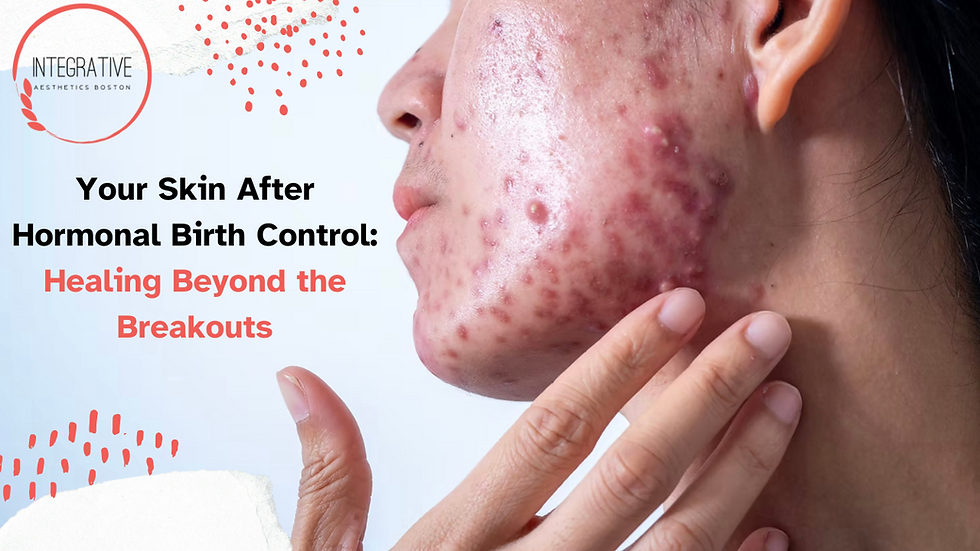
Post–birth control acne
Acne recurrence after stopping spironolactone
Post-Accutane rosacea or increased sensitivity
Persistent oiliness
Pigment changes
Digestive shifts
Reactive skin
This does not mean these medications “damage” the liver in every case. It means that medication history matters.
In functional dermatology, we consider what the body has processed over time — and whether metabolic support may improve long-term skin stability.
Why Self-Treating the Liver/Gut Often Falls Short
When skin flares, many people turn to online “gut healing” or “liver detox” protocols:
Eliminating multiple foods
Switching between vegan, vegetarian, or carnivore diets
Adding probiotics
Trying binders, herbs, or cleanses
Stacking supplements recommended on social media
Sometimes symptoms improve briefly. Often, they plateau — or shift rather than resolve.
This is because the gut–liver–skin axis is not a single pathway. It is a coordinated system involving:
Bile production and flow
Hormone metabolism
Microbiome balance
Intestinal integrity
Blood sugar regulation
Nervous system signaling
True root-cause care is not about adding more. It’s about understanding which systems need support — and in what order. Over time, self-directed experimentation can become costly — financially and physiologically.
The goal is not to push harder. It’s to step back and assess the full picture, using meaningful data to guide individualized care. That level of precision saves time, reduces frustration, and supports more sustainable results.
Skin Stability Requires More Than Suppression
Certain medications may reduce acne temporarily.
Topicals may calm rosacea.
Professional treatments may reduce visible redness.
These interventions have clear value. But if the gut–liver–skin axis remains imbalanced, recurrence is common.
When digestive health, hormone metabolism, inflammatory regulation, and nervous system balance are addressed alongside dermatologic care, results tend to be more stable.
Clearer skin often reflects internal efficiency.
Beyond the Skin Surface
The gut, liver, and skin are not separate systems. They are interconnected. When we treat the skin as an early signal rather than an isolated cosmetic issue, we don’t just improve appearance — we support long-term physiologic balance.
Because lasting skin clarity often begins beneath the surface.
Why Committed Functional Dermatology Guidance Matters
If you are searching for functional dermatology support in Boston because your acne or rosacea keeps cycling along with other symptoms, a personalized gut–liver–skin evaluation may provide the clarity you’ve been looking for.
Our Functional Evaluation is designed to:
Understand your story and how your skin pattern developed
Connect what’s happening on your skin with what may be happening internally
Provide clear recommendations on whether targeted testing is appropriate
Create a personalized plan that supports both your internal health and your skincare routine
No extremes for mild patterns — only when complexity truly warrants it.
No unnecessary restrictions — unless your case genuinely calls for them.
No guesswork.
Just thoughtful, individualized care.
Because lasting skin clarity shouldn’t feel overwhelming — it should feel supported.
If you’re noticing patterns between your digestion, stress, hormones, and skin — it may be time to look deeper. Book an Initial Functional Skin Evaluation at Integrative Aesthetics Boston.
Together, we’ll assess the full picture and create a personalized plan to support lasting balance — internally and externally.
Let’s move beyond suppression and toward stability.
Love & Health,
Noemí Paola
Corrective Skin Care Master & Functional Dermatology Practitioner
Integrative Aesthetics Boston
Frequently Asked Questions
Can gut health really affect acne?
Emerging research shows associations between gut imbalance, inflammation, insulin resistance, and acne severity. While not all acne is gut-driven, digestive health can influence skin patterns in certain individuals.
Is rosacea related to the nervous system?
Yes. Rosacea is increasingly understood as a neuro-inflammatory skin condition. Stress, temperature changes, and emotional triggers can activate neurovascular pathways that worsen flushing and redness.
Medical Disclaimer: This article is for educational purposes only and does not constitute medical advice. Individualized evaluation by a licensed healthcare professional is essential before initiating treatment.